Custom software for businesses that have outgrown their tools.
There's a point in most growing businesses when the tools stop fitting. Information is typed into several places, spreadsheets become too important to touch, and off-the-shelf software needs so many workarounds that the team quietly stops using parts of it.
Custom software replaces that with a system built around how the business actually works. We design the data model first — what the business tracks and how those things relate — then build the screens your team uses every day. Systems are delivered in phases, so the first part is in use early. And because we also build websites, the system doesn't have to stop at your own staff: inquiries can arrive in it directly, and customers or contractors can be given their own access.
What is custom software development?
Custom software development is the design and building of software for a specific organization's processes, rather than buying a product built for the general market. It covers business systems such as CRMs and ERPs, internal tools, customer portals, and the integrations that connect them to other software.
The difference from off-the-shelf software isn't that custom is always better. It's who adapts to whom. With a packaged product, the business adapts to the software's assumptions. With custom software, the software is built around the business — which is valuable when the way you work is part of what makes you competitive, and unnecessary when it isn't.
Custom or off-the-shelf?
When does custom software make sense?
✓ Your process is specific, and packaged tools force workarounds
→ Your process matches how the market generally works
✓ Several tools need to share data that none of them handles well
→ One product covers most of what you need
✓ Per-user subscription costs are growing with the team
→ The team is small and costs are predictable
✓ You need to own the system and the data outright
→ Vendor support and updates are more valuable to you than control
✓ The software is part of how you serve customers
→ The software is purely administrative
If a packaged product fits 90% of what you need, it's usually the better investment, and we'll say so. The most expensive mistake in this area isn't choosing the wrong one — it's building custom software for a problem an existing product already solves.
What we build
Customer relationship management (CRM)
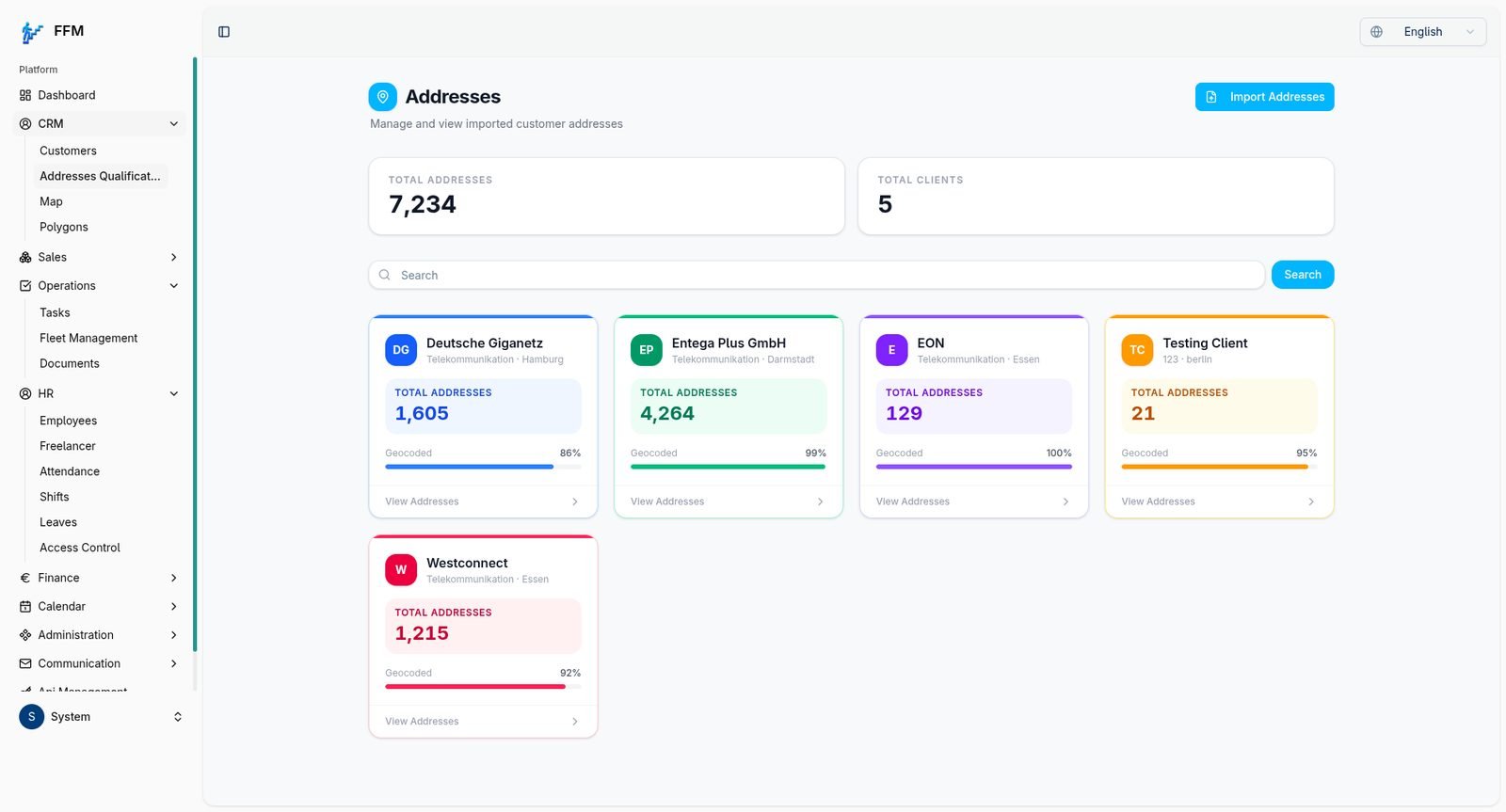
Client and account records, pipelines, follow-up and reporting built around how your team sells or delivers work.
Learn moreEnterprise resource planning (ERP)
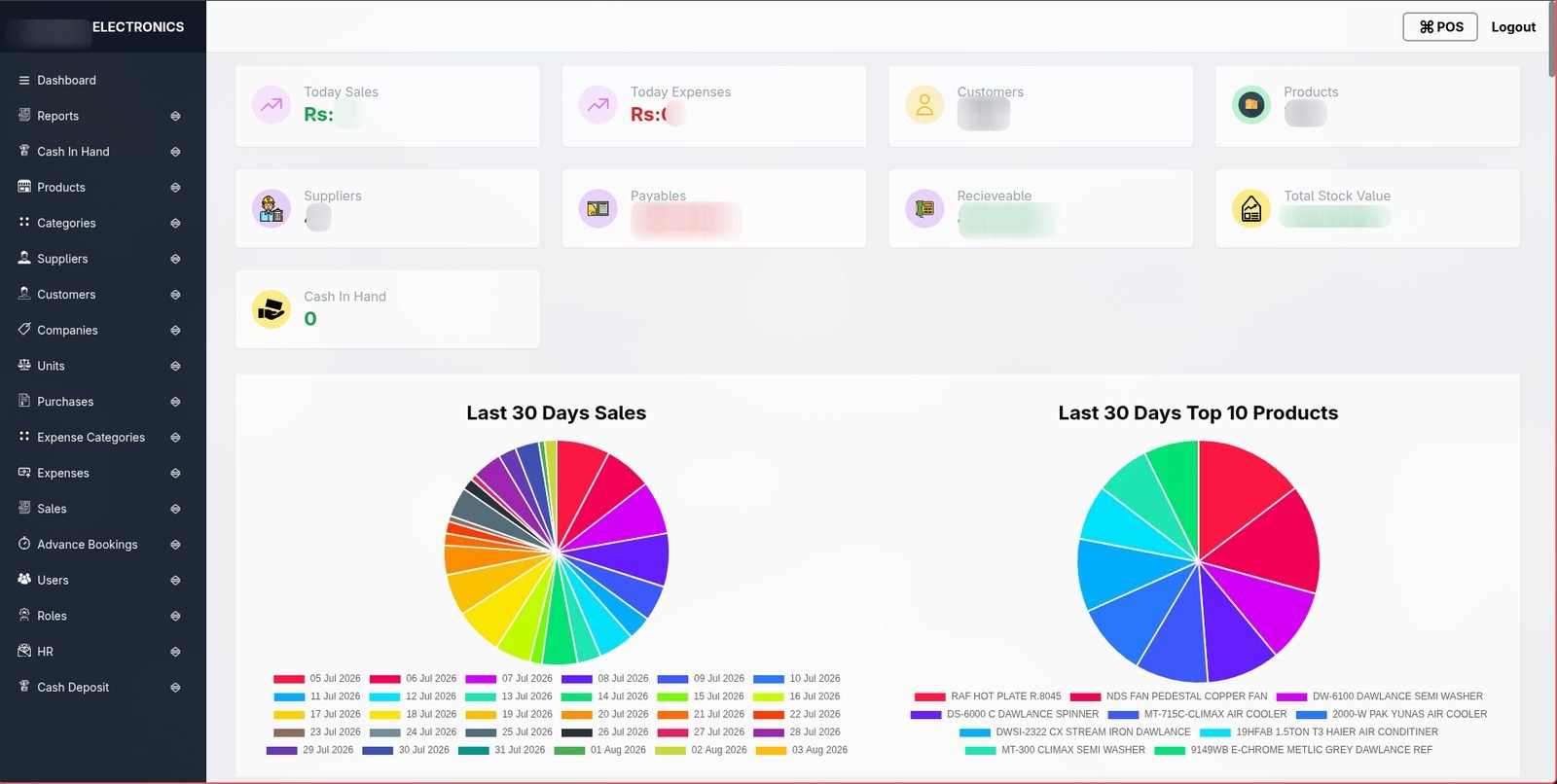
Sales, inventory, purchasing, finance and staff records in one system, so the business works from one set of figures.
Learn moreInventory, dispatch and billing systems
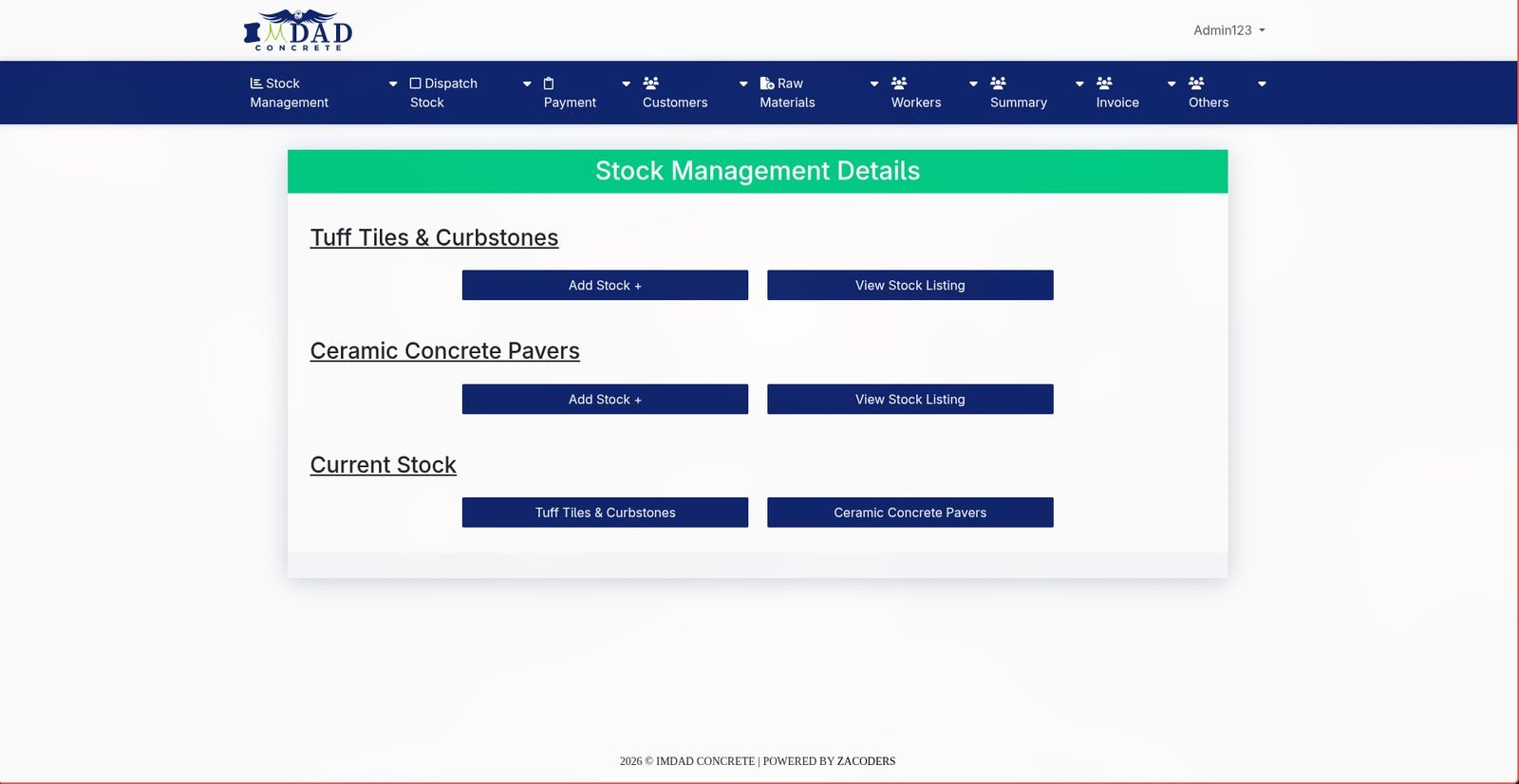
Inventory tracked by location and product, with dispatch paperwork and invoices generated from the same records.
Learn moreCustomer and client portals
Secure access for customers, contractors or partners to their own information.
Learn moreInternal tools and web applications
Focused tools for one job — a dashboard, an approval process, a booking system.
Learn moreIntegrations and automation
Connections between the systems you already use, and automation of the manual steps between them.
Learn moreWhat you get
Discovery that maps the real process
We sit with the people doing the work and map what actually happens — including the steps that live in someone's head, the spreadsheet updated on Fridays, and the email that has to be forwarded before anything moves. Most requirements are discovered here, not in the first meeting.
A data model designed for your business
The structure underneath the system: your customers, products, orders, accounts and records, and how they relate. This is the most important technical decision in any business system. A well-designed data model lets the system grow for years; a poor one makes every later change expensive.
Role-based access
Each person sees and does what their role requires, and nothing more. Permissions are enforced by the system itself, not just hidden in the interface.
Phased delivery
The system is released in usable phases, starting with the part that removes the most pain. Each phase is shaped by how the team uses the previous one.
Connections to what you already use
Accounting, payments, email and your website connected where it makes sense, so data isn't re-keyed between systems.
Data migration
Existing records from spreadsheets or old systems cleaned, mapped and imported, with checks that the figures match.
Training and parallel running
Staff trained on the live system, with the old process kept running until you're confident in the new one.
Documentation, source code and IP
Technical documentation and full source code transferred on delivery. If our relationship ends, another developer can take the system over.
How we build
Technology
We build business systems with Laravel, a PHP framework suited to database-driven applications with complex business rules, permissions and integrations. It's mature, widely used and well documented, so systems built with it are maintainable by other developers — an important consideration for software a business will depend on for years.
Principles
- Data model before screens. The structure is agreed before interfaces are designed.
- Build for change. Businesses change; systems should expect new products, locations and rules.
- Validate at entry. Errors prevented when data is entered, not discovered in reports.
- Keep an audit trail. Important records show who changed what and when.
- Plan for handover. Code and documentation written so someone else could maintain them.
Security basics
Authentication, role-based permissions checked on every request, encrypted connections, input validation, regular dependency updates, and backups. Systems that handle sensitive data need specific requirements agreed at the start.
The risks of custom software — and how to manage them
Discovery produces a written scope; changes are priced and agreed before work
Discovery with the actual users; phased releases with feedback
Phased delivery; old and new systems run in parallel
Full source code, documentation and IP transferred to you
Data cleaned and checked before and after import
Data model designed for change from the start
Is this you?
Businesses running on spreadsheets, email and software that almost fits, at the point where the gaps are costing real time. The signs:
- The same information is typed into two or three places.
- Nobody fully trusts the numbers, because different sources disagree.
- Key processes depend on one person who knows how a spreadsheet works.
- Off-the-shelf software forces workarounds the team has stopped questioning.
- Growth means hiring more administrative staff rather than doing more with the same team.
If you need something smaller — one dashboard, tool or portal — see web application development.
What it costs
Custom software is priced after discovery as a fixed figure for each phase. The main factors:
- Number of modules — distinct areas such as sales, inventory, billing
- User roles — how many different kinds of user, with different permissions
- Data migration — how much existing data, and how clean it is
- Integrations — how many other systems, and how well they share data
- Reporting — the number and complexity of reports
- Specific requirements — such as regulatory or security needs
Frequently asked questions
How long does custom software take to build?+
It depends on the number of modules. Because delivery is phased, the first module is usually in use well before the full system is complete. You get a timeline with the fixed price after discovery.
What happens to our existing data?+
It's cleaned, mapped and migrated into the new system as part of the project, and the old process runs alongside until the figures match.
Who owns the software?+
You do. Source code and intellectual property transfer to you on delivery.
What if we stop working with you?+
Because the code and documentation are yours, and it's built on widely used technology, another developer can take it over.
Can the system connect to our website?+
Yes. Website inquiries can be recorded in the system directly, and customers or contractors can be given portal access.
Discuss your system
Tell us what the business runs on today and where it's costing you time. We'll tell you whether custom software is the right answer — sometimes better use of existing software is — and what a first phase could cover.