Custom ERP development
When sales, inventory, purchasing and finance are each tracked in a different place, nobody has one reliable figure for anything. Month-end takes days of reconciliation, inventory counts drift from what's on the shelf, and decisions get made on numbers that are already out of date.
An ERP brings those functions into one system, so everyone works from the same live data. We build custom ERPs for businesses whose operations don't fit the assumptions of packaged ERP products — delivered module by module, with existing data migrated and checked, and the source code yours when it's done.
What is an ERP?
An ERP (enterprise resource planning) system is software that brings a business's core operations — typically sales, inventory, purchasing, finance and staff records — into one shared database, so every part of the business works from the same information. A sale reduces inventory, creates an invoice and updates the customer's balance in one step, instead of in three separate systems.
A custom ERP is built around a specific business's processes. A packaged ERP — such as Odoo, NetSuite or SAP Business One — provides standard modules that the business configures and adapts to.
Custom ERP or packaged?
→ Your processes are broadly standard for your industry
✓ Your sales models, pricing or operations are unusual
→ You want to start quickly
✓ You can start with one module and grow
→ Vendor updates and support matter most
✓ Ownership and fit matter most
→ Licensing costs fit your budget as you grow
✓ Licensing and customization costs have become significant
→ An implementation partner can configure what you need
✓ Configuration would require extensive custom development anyway
Packaged ERPs work well for many businesses. The warning sign is when an implementation starts requiring heavy customization — at that point, you're paying for a product and for custom development, and inheriting the constraints of both.
What you get
Sales and order management
Orders recorded once, whatever the payment method, with each sale reflected in inventory and customer balances immediately.
Inventory by location and product
Levels updated as sales, receipts and transfers happen, across branches or warehouses.
Purchasing and suppliers
Purchase orders, deliveries and returns tracked against suppliers, so incoming stock reconciles with what was ordered.
Customer and supplier ledgers
Balances, payments and outstanding amounts with a clear audit trail.
Staff records
Staff and attendance information can be brought into the same system, where the business needs it — scoped case by case rather than assumed by default.
Reporting owners actually use
Sales, cash flow, inventory risk and outstanding balances presented as answers, not raw exports.
Phased delivery
Released module by module, starting with the area causing the most problems.
Migration and parallel running
Existing data migrated and checked; the old process runs alongside until the figures match.
Connections to the rest of the business
Accounting software, payment providers and online stores connected, so inventory and sales stay consistent across channels.
Your code and your data
Source code and IP transferred on delivery. No licensing fees.
How a custom ERP is delivered
ERP projects have a reputation for running late and disrupting the business. Most of that reputation comes from "big bang" implementations — everything switched over on one day. We avoid that:
- 1.
Discovery — Map how sales, inventory, purchasing and finance actually work, and where the numbers stop agreeing.
- 2.
Data model — Design the structure that every module will share.
- 3.
First module — Usually the area with the most daily activity or pain, often sales and inventory.
- 4.
Parallel running — The new module runs alongside the old process until its figures are trusted.
- 5.
Next modules — Added one at a time, each shaped by experience with the last.
- 6.
Reporting — Built once the underlying data is reliable.
The business keeps operating throughout. Nobody relearns their whole job on one day.
Signs a business needs an ERP
- Month-end reconciliation takes days.
- Inventory in the system doesn't match inventory on the shelf.
- The same order is entered into more than one system.
- Nobody can produce a reliable cash position without a spreadsheet.
- Adding a branch, product line or sales channel means adding another spreadsheet.
- Key knowledge lives with one or two people.
Is this you?
Businesses running retail, wholesale, production or distribution operations where inventory, sales and money are tracked in different places, and nobody has one live figure for any of them.
If inventory is the main problem rather than the whole operation, start with inventory management systems. If a packaged ERP would fit, we'll say so.
Systems we've built.
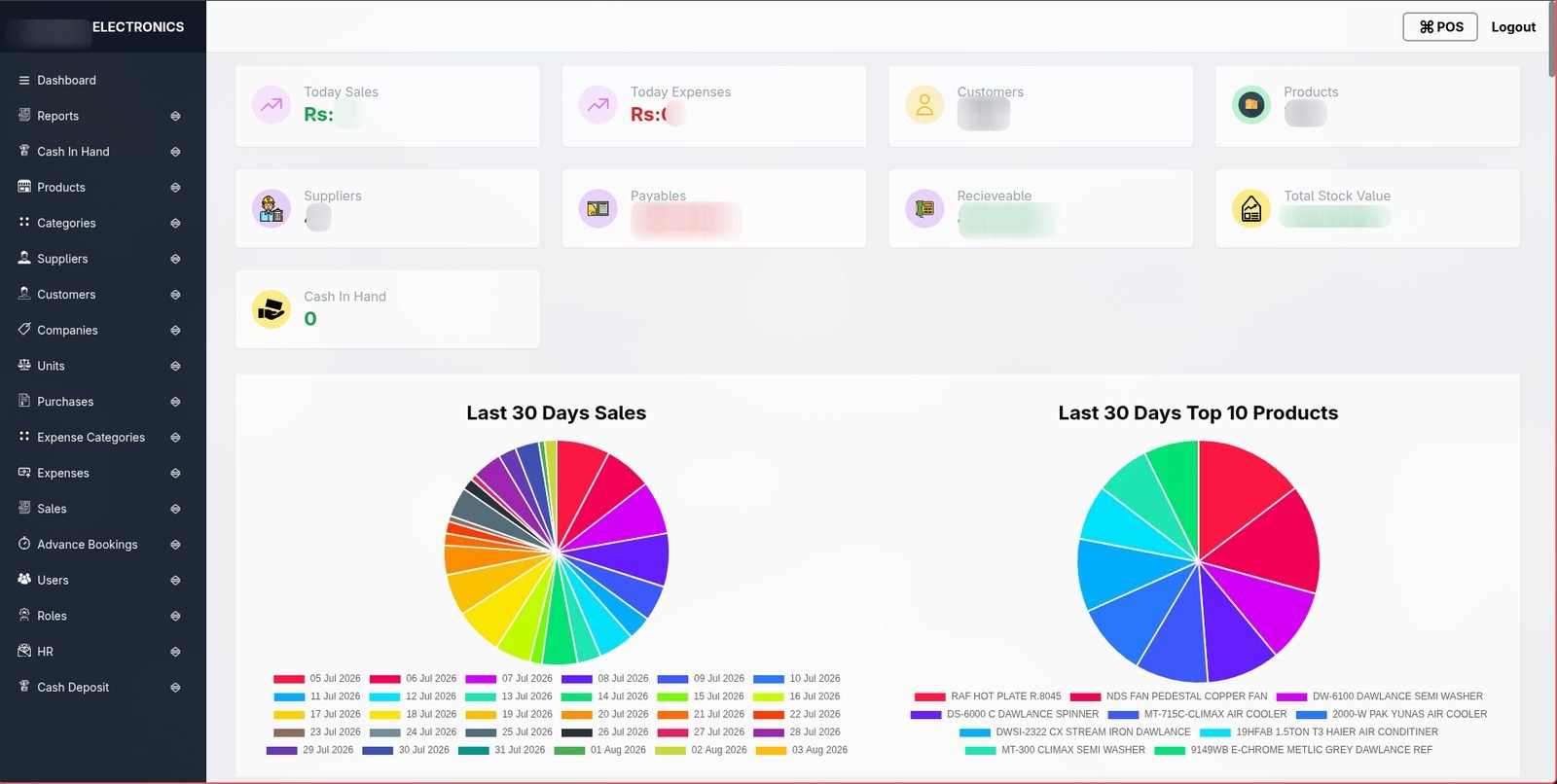
Custom Laravel ERP for a Retail & Electronics Business
One system for a retail business's sales, inventory, installment accounts and staff records.
Read the case study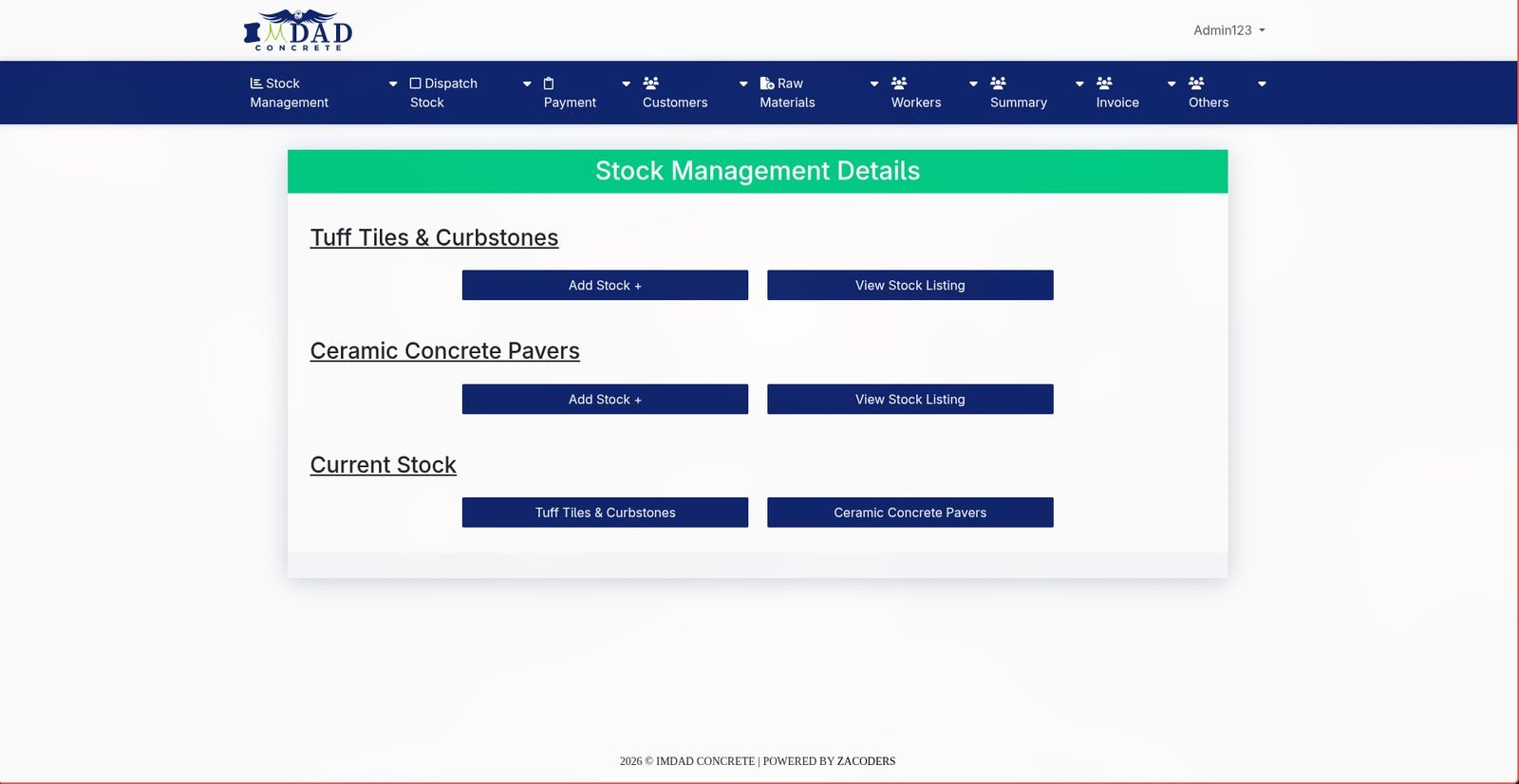
Stock, Dispatch & Billing for a Construction Materials Manufacturer
Inventory, dispatch and billing brought into one operations system for a construction materials manufacturer.
Read the case studyWhat it costs
Main factors:
- Number of modules, locations and user roles
- Data migration volume
- Integrations with accounting, payment and ecommerce systems
- Reporting requirements
Because delivery is phased, cost is committed phase by phase.
Frequently asked questions
How long does a custom ERP take?+
The first module is typically in use well before the full system is complete. Total timeline depends on the number of modules and the data being migrated.
What if the new system gets something wrong?+
The old process runs alongside until the figures match. Nothing is switched off until you're confident.
Can the ERP connect to our online store?+
Yes. Inventory and orders can be shared with an ecommerce store so online availability stays accurate.
Can we start small?+
Yes. Many businesses start with one or two modules and add more as each proves itself.
Who owns the ERP?+
You do. Source code and IP transfer on delivery.
Book an ERP discovery call
Tell us what the business runs on today and where the numbers stop agreeing. We'll map what a first phase could cover — and tell you if a packaged ERP would serve you better.