Software and ecommerce for retail and wholesale businesses.
Retail and wholesale businesses often run sales, inventory and customer credit across separate spreadsheets and a point-of-sale system that doesn't talk to any of them. Add an online store and trade customers, and the same inventory is being sold through three channels that each keep their own count.
We've built a retail ERP covering sales, inventory, installment accounts and staff records in one system. We also build ecommerce stores, and can connect them to the system that manages inventory, so every channel draws on the same figures.
Where retail numbers stop agreeing
Counts drift; stocktakes reveal large discrepancies
Items sold online that are already gone
Overdue accounts missed; balances disputed
Deliveries not checked against orders
Re-keying errors; inconsistent pricing
Decisions made on last month's numbers
Each gap is small. Together they mean the owner never has one reliable picture of the business.
Running the business
Sales across payment models
Cash, credit and installment sales recorded in one flow, with balances and due dates tracked automatically.
Inventory by branch and product
Stock updated as sales, receipts and transfers happen.
Customer and supplier ledgers
Who owes what, who's been paid, with an audit trail.
Owner reporting
Sales, cash, inventory risk and overdue balances, built from live data.
Selling online and to trade
An online store built on real inventory
Products and categories structured the way your range works, with pages built to be found in search.
One inventory figure across every channel
The store connected to the system that manages inventory.
Trade accounts
Account-specific pricing and ordering through a portal can replace phone calls and emailed orders — scoped case by case around how your trade accounts actually work.
A note on installment sales
Installment and in-house credit sales are among the hardest things to run from a spreadsheet: every sale needs a schedule, a running balance and a way to flag who's behind. A system can track all of that reliably.
In the United States, offering financing to consumers also carries lending-disclosure and state-level requirements. Software can record payments and schedules; compliance remains with the retailer and their advisors.
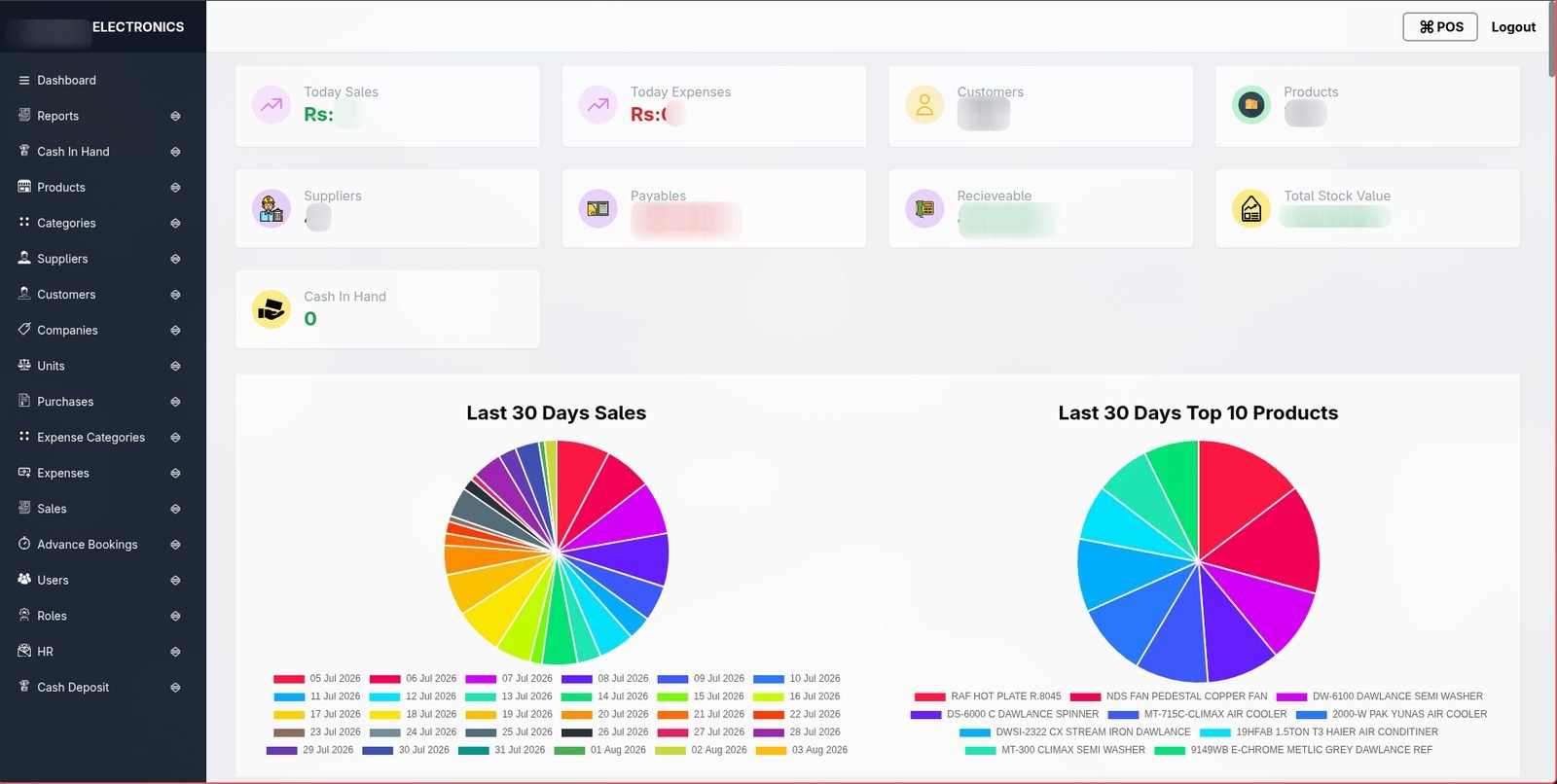
Custom Laravel ERP for a Retail & Electronics Business
One system for a retail business's sales, inventory, installment accounts and staff records.
Read the case studyWe don't yet have a public ecommerce case study for the online-selling half of this page — we're happy to walk through relevant examples on a call.
Frequently asked questions
Can our online store and shop share the same inventory?+
Yes, if the store is connected to the system that manages inventory.
Can the system track installment payments?+
Yes — schedules, balances, payments and overdue accounts, in the same system as the sale.
Custom ERP, or connect what we already have?+
If your POS and accounting tools work well individually, connecting them may be enough. A custom system makes sense when the way you sell doesn't fit packaged software.
Often bought alongside this.
Discuss your retail or wholesale business
Tell us how you sell — in-store, online, to trade — and where the numbers stop agreeing.